
Category: Blog Post
Canada’s Ocean Ambition: Shaping the next phase of Canada’s Ocean Supercluster
|
|

Collaboration is a key component of Canada’s thriving ocean startup ecosystem

By: Natasha Legay, Senior Program Coordinator at the Ocean Startup Project
Innovative startup teams are developing cutting-edge technologies that are reimagining a more sustainable future with the potential to change the world.
So what can leaders in the innovation space do to better support the growth and development of entrepreneurs? They can explore and create more opportunities for the ecosystem to better serve these founders – together.
Founders benefit most where key stakeholders – government, academic communities, risk capital, industry and ecosystem partners – intersect with a unified approach to fostering innovation and entrepreneurship: through collaboration. Vibrant, inclusive and globally impactful innovation ecosystems are driven by collaboration that makes it easier for homegrown innovations to reach global markets.
The ocean startup ecosystem alone has had a tremendous boost in recent years with the launch and expansion of partnerships, hubs and support networks nationally. One example of this growth is the Centre for Ocean Applied Sustainable Technologies (COAST); they are championing a collaborative call-to-action from the Pacific region’s marine sector entrepreneurs, corporations, academia, investors and government to leverage ocean opportunities.
In Central Canada, Quebec is quickly emerging as a leader in the Blue Economy. Organizations such as Technopole maritime du Quebec (TMQ), Novarium, Merinov, Innovation Maritime, Centre de Recherche sur les Biotechnologies Marine, and other innovation-focused groups are catalyzing ocean startup activity in the province and Canada, bridging ecosystem gaps, connecting communities and nurturing the development of entrepreneurs.
The Ocean Startup Project’s national expansion is proof that we can achieve so much more by working together to support entrepreneurs at all stages of their development, and nowhere was that more apparent than at Startupfest 2022 in Montreal in mid-July, where creating a supportive ecosystem for entrepreneurs took centre stage.
More than 50 people from various Atlantic Canada-based startups and innovation hubs, like Propel ICT, Volta, Venn, Ignite Atlantic, Startup Zone PEI, Planet Hatch, and more, attended the startup conference under the newly-launched Startup Atlantic brand. As a national project in scope, we were thrilled to be part of that delegation that brought together ecosystem stakeholders from all four Atlantic Canadian provinces, promoting the benefits of building and growing global technology companies in the region – and embodying the spirit of ecosystem collaboration we’re seeing across the country.
As a national startup ecosystem, we must continue to work together to identify and highlight opportunities so that Canadian innovators can win globally.
At the OSP, we believe Canada is the best place in the world to start and grow an ocean technology business, and that’s why we’re working with ecosystem partners across the country to promote ocean opportunities and seed startup ideas. One way we’re doing this is through our third Ocean Startup Challenge, a competition that supports idea and early stage teams as they develop solutions to ocean industry problems. This year, we’re collaborating with several partners to highlight ocean innovation opportunities. We’ll showcase these opportunities leading up to our September 1 application deadline to inspire Canadian innovators to implement their ideas, technologies or research to solve industry challenges.
Since 2020 when the OSP was launched through Canada’s Ocean Supercluster, it has provided more than $2.2-million in funding and programming support to 43 early stage teams through the Ocean Startup Challenge, four teams through the Ocean Idea Challenge, and another 39 teams through Lab2Market Oceans. Those early stage teams have made an impressive impact in a short time by creating more than 100 jobs and raising $7.5-million+ in non-dilutive funding and nearly $8.5-million in equity investment since working with us.
But we couldn’t have accomplished this without strong partnerships and support from ecosystem collaborators. Every meeting invite accepted, collaborative event hosted, founder referral provided, competition application reviewed, and mentor session attended have enabled us to support more than 83 ocean founders so far.
We’re always learning and drawing inspiration from our ecosystem partners as a Project. Startup Atlantic, the Blue Innovation Corridor and other collaborative ecosystem initiatives are excellent reminders of what combined efforts and a purpose-driven, founder-focused mission can achieve for startup communities and the broader Canadian innovation ecosystem.
The OSP wants to connect startup communities across the country with resources that can help early stage ocean businesses grow. We’re always open to collaborating with organizations and community groups interested in shining a spotlight on ocean startup opportunities. For more information about the Ocean Startup Project and to connect with our team, visit www.oceanstartupproject.ca
Canadian and Global Community Unite Around Ocean in June

By: Kendra MacDonald, CEO, Canada’s Ocean Supercluster

June has been a very busy ocean month. It has been so amazing to get out and meet people in the ocean community all over the world after many, many months of zoom calls and virtual connections. A virtual coffee chat does not compare to the ability to sit outside next to the water in Lisbon and talk about the future of ocean. The past few weeks have had many highlights: World Ocean Day at the United Nations in New York, the H20 conference in Halifax, the Green Marine conference in Montreal, the Global Innovation Summit in Estoril, and the United Nations Decade of Ocean conference in Lisbon, just to name a few – and that is just June. I wanted to share some takeaways although given the many activities, it was hard to narrow it down to just a few.
1. We have a story to tell: The world is interested in what’s happening in Canada. We have created incredible momentum in the last few years and the well-attended Canadian conferences the OSC team has participated in this past month has been a great indicator of that energy. As an example, there were so many companies with so much exciting work on display at booths at H2O followed by a sold-out showcase event at the Centre for Ocean Ventures and Entrepreneurship’s (COVE) Demo Day. These are the kinds of activities that help feed into the momentum Canada is building, and a demonstration of what is possible when we work together. It is this approach that got us invited to speak at the World Ocean Day event in New York alongside Salesforce and the United Nations, sharing Canada’s contribution to the revitalization of the ocean economy. While there, I had the opportunity to listen to Sylvia Earle, the first woman to become Chief Scientist of the United States National Oceanic and Atmospheric Administration (NOAA), share her perspectives and reinforce the message that there is no green without blue – something we certainly believe at the OSC. We were also chosen as one of fifty global Ocean Titans as part of a new World Ocean Council docuseries featuring the amazing projects of some of our member companies, and launched on June 29 by Reuters. It was with a whole lot of pride and optimism that I shared Canada’s ocean story at several panels over the last month on topics ranging from innovation to climate to coastal communities.
2. We need to increase our ambition: While we should be proud of all that we have accomplished, our ocean economy in Canada remains a small contributor to our overall GDP. While listening to the many announcements and reconnecting with stakeholders around the world, it was evident that the rest of the world is also moving fast and, in many cases, with more investment and more focus. Hydrogen, small modular reactors, carbon capture, storage and use, wave energy, seaweed products, regenerative marine tourism and the list goes on – there were many stories of cutting-edge technologies and solutions being built around the world and an increasing number of programs to make those solutions more accessible. What was clear at the UN Decade events, and in listening to speakers like John Kerry, Special Presidential Envoy for Climate of the United States and Peter Thomson, UNSG’s Special Envoy for the Ocean is that we need to move faster if we want to be leaders in the blue economy, and save our ocean and our planet. We need to continue to build awareness of Canada’s ocean opportunity; engage everyone in the ocean conversation including bringing Indigenous knowledge and Western knowledge together; connect coastal communities; attract more technology companies to the ocean economy; and scale solutions. And, we need recognize that in order to achieve emissions reduction targets on land, we must achieve them in the ocean.
3. There is much more opportunity for global collaboration: We are getting increasing interest in building partnerships as are other organizations in Canada’s ocean ecosystem: Oceans Advance signed a memorandum of understanding with nine clusters around the world in Portugal; COVE signed an agreement for a scale up program with Innovate UK; and both the OSC and Marine Renewables Canada signed agreements with the European Leaders in Blue Energy consortium – all in the month of June. How do we maximize the value of these partnerships to the benefit of our member companies? How can member companies leverage international relationships to scale more quickly?
It is an exciting time for Canada’s ocean economy and I am thrilled to be a part of it. The OSC team works tirelessly every day to continue to change the way we do business in the ocean across Canada and build an ocean economy that is increasingly digital, sustainable, and inclusive. These themes resonate around the world. It is, however, a time where the ocean is also facing unprecedented challenges and our ability to tackle those challenges quickly and in a coordinated way around the world is tied to the quality of our future life on the planet and the health of the planet itself. If in your work you are looking for a way to make the world a better place, I would strongly encourage you to explore opportunities in the ocean, if you haven’t already. I am re-energized with the level of conversation and interest in the work we are doing and look forward to the next steps on the OSC journey.
Careers in Canada’s Ocean Economy

The Opportunity for Rewarding Contributions to Canada’s Sustainable Development of the Ocean
Submitted by: Melody Pardoe, Chief Engagement Officer, Canada’s Ocean Supercluster
When Canadians think about the ocean, what comes to mind? Unique and rewarding careers that span everything from robotics to data analysis to clean energy, or do they think of whale watching, sea kayaking, fishing and surfing? In addition to recreation and nourishment, we hope that more and more people think of the ocean as a place for economic prosperity and a source for a rewarding career.
Nearly 30% of the world’s population lives along ocean coasts. With the longest coastline in the world, Canadians have the option to live in hundreds of coastal communities, all with unique cultures and economic opportunities. Living and working close to the ocean is extremely rewarding, something I personally recommend everyone try if they have the opportunity.
Canadian ocean companies are developing new technologies that are at the forefront of mitigating climate change and modernising traditional industries such that we are learning more about the ocean and lessening the harmful impacts on our shared aquatic global ecosystem. These solutions will allow us to sustainably meet the increasing demand for protein, decarbonize marine transportation of goods and people, transition to clean energy to power the world, and collect the data we need to monitor and operate in our ocean environment with a reduced footprint. It is through technology, collaboration and respectful relationships with Indigenous peoples that we will enjoy a thriving sustainable ocean economy. It’s exciting to know that the hundreds of small (and growing) businesses involved in Ocean Supercluster projects are leading the way with ocean innovation globally, and these companies are hiring – there are thousands of available jobs being created in ocean industries.
Our team recently took a deep dive into the jobs currently advertised by our member companies, and the range of opportunities are vast. We found that more than half of these roles required technical competency (e.g. engineer, technician, software developer, etc.) and just over 25% were senior management positions. The Organisation for Economic Co-operation and Development (OECD) anticipates that by 2030, the world’s ocean economy will double to $3 trillion (USD) outpacing the general global economy by a factor of nearly 20%. If you have never worked in an ocean industry, I encourage you to consider a new adventure, contributing to this momentous growth.
Please get in touch with us to become a member or follow us on social media to hear about the amazing things OSC members are building. In addition, here are a few places to start exploring ocean careers:
- SOI Foundation – Ocean Careers
- Schmidt Marine – Jobs
- COVE – Work in Ocean Tech
- OTCNS – Careers
- Ocean Careers NL
Canada is an ocean nation; how will you get involved? I’m always open to connecting, please feel welcome to reach out on LinkedIn.
Two-Eyed Seeing for a Sustainable Blue Economy
Leah Beveridge & Shelley Denny, Two-Eyed Seeing Advisory Committee Members
|
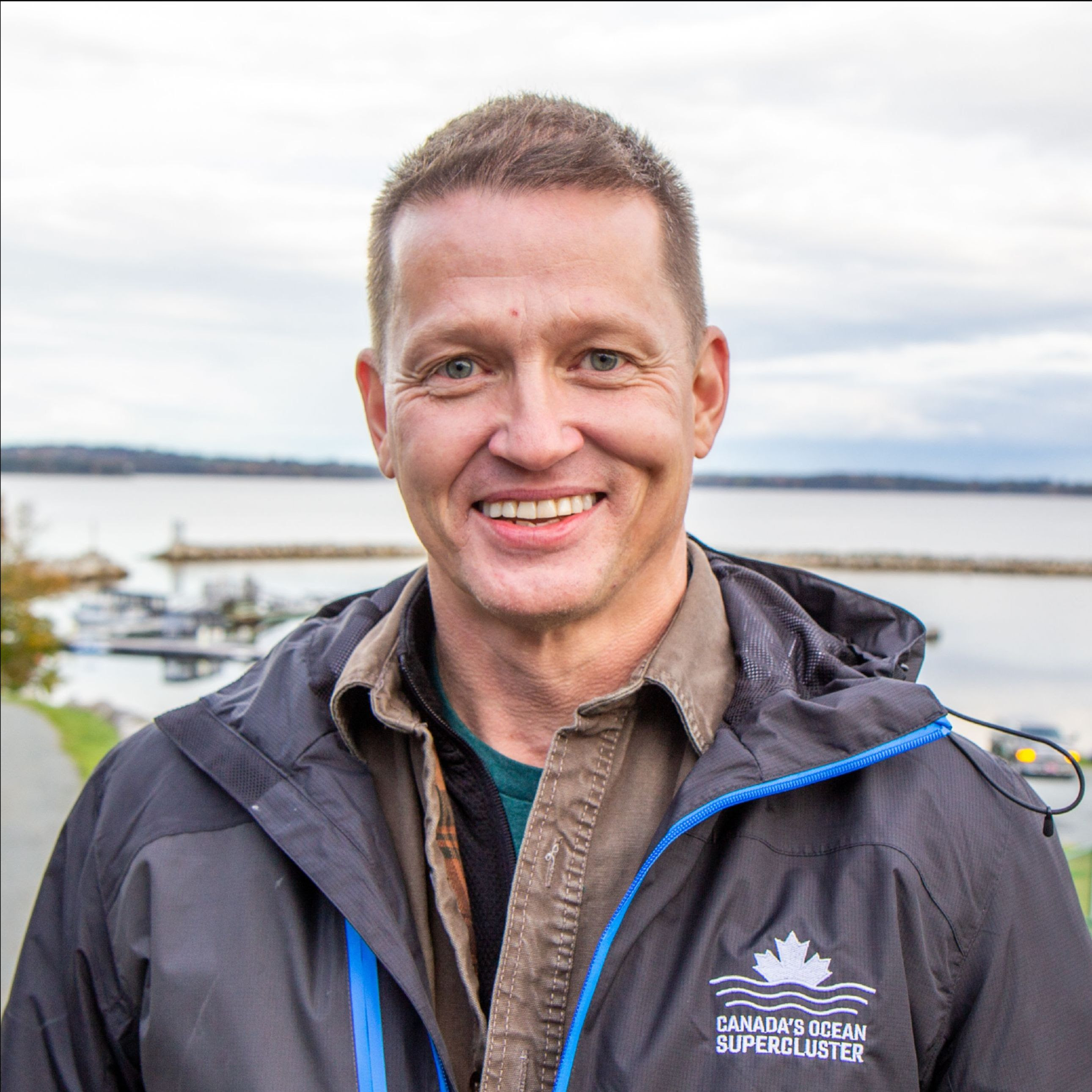
Ralph Eldridge
Indigenous Engagement Lead
Canada’s Ocean Supercluster
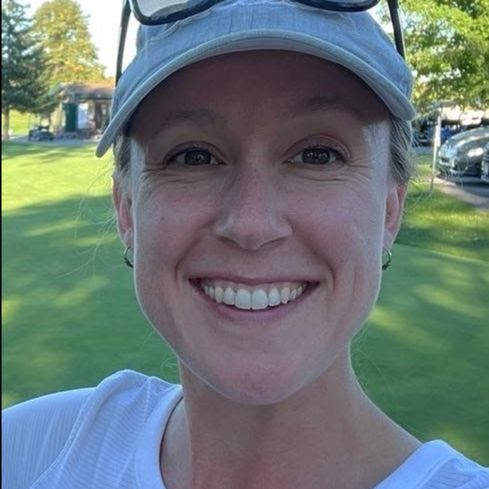
Leah Beveridge
Two-Eyed Seeing Advisory Committee Member
PhD Candidate
Dalhousie University

Two-Eyed Seeing Advisory Committee Member
Director of Aquatic Research and Stewardship
Unama’ki Institute of Natural Resources
BLACK IN CANADA
I recently became a citizen of Canada. During my first few days in Canada, I found many reasons to be grateful to be here. In pursuit of better economic and academic prospects, I left a blossoming career in communications and public relations in my home country of Nigeria and traveled over 7000 miles to Canada to pursue my post-secondary education. My adopted community in Victoria, British Columbia, afforded me a life-changing opportunity to connect, engage and learn about “inclusivity” and what it means for me as a Black woman in Canada. I learned through my own experience as an international student and through the lived realities of others who, like me, came to Canada as international students, immigrants, or refugees seeking opportunities for self-actualization.
These collective experiences have formed the basis for the work we do at The Inclusion Project, in leading change through research, public engagement, and inclusive leadership. Our work in employment equity seeks to engage organizations and key stakeholders in upholding equitable practices for equity-deserving groups across Canada. We do this by developing and strengthening accountability frameworks, roadmaps, and benchmarks for best-in-class practices in intersectional Racial Equity, Diversity, and Inclusion (REDI+). Through our audit, assessment, and advisory services, we serve some of Canada’s leading institutions and stakeholders across public and private sectors on standard practices for employment equity.
In my day-to-day role, I have had many opportunities to learn, educate, and advise many organizations and stakeholders on inclusivity and what it means to me as a Black woman in Canada. The reality for many like me is that these opportunities do not abound. For many Black women, there are fewer opportunities for self-actualization through economic or social access, and in many cases, representation in policy or leadership positions. Sometimes, numbers tell the story:
- Despite growth in Labour Market Availability, in 2016, less than 10% of Black Canadian professional candidates at a Canadian University were hired for middle-management positions and above. Instead, Black hires were overrepresented among service positions, and female candidates were overrepresented in administrative positions.
- In 2016, approximately 70% of Black women and 63.6% of Black men had at least post- secondary or Apprenticeship or trades certificate or diploma (StatsCan). About 1 in every 7 working women in the top 1% belonged to a visible minority group, compared with 1 in 5 in the working population (StatsCan).
- A 2021 study by the Diversity Institute shows that the unemployment rate for persons who identify as non-Indigenous and non-visible minority was 9.3%. The rates of unemployment were much higher for those who identify as South Asian (17.8%), Arab (17.3%), Black (16.8%), Southeast Asian (16.5%), Latin American (16%), Chinese (14%), and Filipino (13.2%).
While numbers do not capture all of the multi-layered, overlapping and intersectional experiences of Black people in Canada, it starts to show us where we are as a society and if we follow the prompt of the data, it also tells us what we need to do to move the needle on racial equity. To do so, we must begin by collecting and analyzing race-based disaggregated data and engaging with lived experience and expertise to help chart the course for equity in our policies, process and practices.
I hope that as a society we will find some shared imperatives to do better to respond to the needs of our own First Peoples, and as well, Black, Asian, and all other equity-deserving groups in Canada. As we work toward equity, my hope is that it will be equity for all.
Canada’s Oceans sector should not be left behind in catching up to the change that is already on the horizon. To move forward, we will need to create and strengthen opportunities for cross-sector collaborations and partnerships.

Ruth Mojeed Ramirez is the Chief Equity Officer of The Inclusion Project. She brings extensive lived experience and grounded expertise to her work in racial equity, diversity and inclusion. Her research, engagement and solutions design focus on an intersectional and inter-generational approach to address complex issues of race, decolonization and gender equity. She leads organizational REDI strategy development and coaching among multi-level stakeholders in public and private sectors. You can read about some of her work through the Employment Equity Partnership & the Racial Equity, Diversity & Inclusion.
Canada’s Ocean Startup Ecosystem can lead the world in the Blue Economy
Richard Egli, Managing Director at Alacrity Canada
|
|

|

Holiday Message – Message du temps des fêtes – 2021
Inclusive and sustainable economic growth means changing the way we work in our ocean
|

|

|
|

Truth and Reconciliation

By: Ralph Eldridge, Indigenous Engagement Lead, Canada’s Ocean Supercluster
Truth and Reconciliation are two very powerful words in the modern Canadian lexicon. Separately, they sit as idle words but when paired they represent a dark past, a painful present, and a country’s continuing effort to make reparations with its Indigenous peoples.
This week, for the first time, we pause as a country to mark the National Day for Truth and Reconciliation, a day to commemorate the lost children of residential schools, survivors, and the generations of those who continue to be affected by this legacy of trauma. It was first proposed, nearly six years ago, as one of 94 Calls to Action of the TRC’s final report. Although a long time in the making, the creation of this new federal statutory holiday was announced quickly after the very painful confirmation of an estimated 200 burial sites at a former BC residential school on the Tk’emlúps te Secwépemc First Nation and later followed by further evidence by the Cowessess First Nation of an additional 750 unmarked graves at a former residential school in Saskatchewan.
It is estimated that over 150,000 Indigenous children were ripped from the grips of their loving families to face a severe indoctrination that robbed them of their identities. Like most Canadians, I shudder to comprehend the legacy of this trauma and how it has resulted in so much of the disparity and desperation faced by Indigenous communities coast to coast to coast. It’s hard to imagine how this can ever be reconciled any time soon, but without a doubt, it has to begin with the truth, the truth from Indigenous voices, the way they choose to tell it, and that describes the true measurement of forced assimilation.
I have to admit, I have not read the Truth and Reconciliation Commission’s full reports. I have read scholarly articles and summaries of findings and have read the TRC’s 94 Calls to Action. These calls are a blend of actions that attempt to rebuild what has been lost for Indigenous peoples and are concrete measures for which all Canadians can advocate. These Calls to Action, along with the United Nations Declaration on the Rights of indigenous Peoples are good starting points for Canadians to begin to educate themselves on the historical injustices, apartheid, and genocide of Indigenous peoples, and reconciliatory paths forward.
I had the privilege, in a previous role, to be connected with top Indigenous Educators in Newfoundland redeveloping curriculum that would better represent Indigenous perspectives. Through these conversations, I began to appreciate that learning outcomes for Indigenous people must be based in Indigenous teachings that are reflexive, reflective, intergenerational, spiritual, and interconnected. I think all Canadians can apply this in how they approach their own understanding of Indigenous world views. We can do a better job of listening, not with our western linear mindset, but with a circular understanding that what has happened in the past will affect the present, and what we do now will affect the future seven generations. Through understanding there is opportunity.
Mi’kmaw Elder Albert Marshall first conceptualized Etuaptmumk – Two-Eyed Seeing. It is based on an integrated approach to learning – to see from one eye with the strengths of Indigenous knowledge and ways of knowing, and from the other eye with the strengths of Western knowledge and ways of knowing. Indigenous communities are natural collaborators in ocean resource management, innovation, and research which is rooted in their historical, traditional, and cultural connection to the ocean. For ocean sector participants this wisdom can be the guiding principle to forge relationships with Indigenous communities and build partnerships that identify community priorities that benefit both parties. Certainly, for the Ocean Supercluster this is where our work begins. Stay tuned.
Ralph Eldridge
Indigenous Engagement Lead,
Canada’s Ocean Supercluster