
Canada’s Ocean Supercluster Launches 2024 AI Ocean Call for Proposals

Canada’s Ocean Supercluster (OSC) has launched its 2024 AI Ocean Call for Proposals. This new call program is focused on the accelerated advancement of Artificial Intelligence (AI) in ocean, recognizing its substantial potential to profoundly influence the future, health, and prosperity of the world’s oceans.
Through Ambition 2035, Canada has a five times growth, $220 billion potential in the ocean economy. The pervasive use of AI in operational decision-making is poised to significantly shape global opportunities and contribute to transformational growth in Canada’s sustainable ocean economy.
Through its AI Ocean Program, the OSC will collaboratively invest with industry partners in successful project proposals. This financial support aims to provide the necessary means for companies to secure the capabilities required for Canadian firms to establish and maintain a competitive global position.
This Call for Proposals is a deadline-driven and competitive framework, providing companies seeking to co-invest with the OSC an avenue to enhance their AI knowledge, capabilities, and overall competitiveness.
The deadline for submitting an Expression of Interest (EOI) to the AI Ocean Call for Proposals is February 27th, 2024, at 8:00PM Atlantic | 7:00PM Eastern | 4:00pmPM Pacific. Full program guidelines can be found here [LINK]. Complete EOI submissions must be submitted via email to: AI@oceansupercluster.ca. To learn more about AI Ocean Call for Proposals here – https://oceansupercluster.ca/aioceancall2024/.
About Canada’s Ocean Supercluster (OSC)
Canada’s Ocean Supercluster accelerates the development and commercialization of made-in-Canada ocean solutions in energy transition, food security, future of transport, and climate change while also growing more companies, creating more jobs, and attracting ocean talent. As Canada’s national ocean cluster, the OSC is a convenor of members, partners, and networks and a catalyst for transformative growth that helps build the robust ecosystem needed to help realize Ambition 2035 – a 5X growth potential in ocean in Canada by 2035. To date, the OSC has grown its membership to almost 600 members from across the country and approved more than 90 projects with a total value of approximately $400 million which will deliver more than 200 new made-in-Canada ocean products, processes, and services to sell to the world. For more information visit oceansupercluster.ca
Media Contact:
Nancy Andrews
Canada’s Ocean Supercluster
nancy.andrews@oceansupercluster.ca
Canada’s Ocean Supercluster Launches Scaled Renewable Ocean Energy Call For Proposals To Support The Sustainable Growth Of Canada’s Ocean Economy
Canada’s Ocean Supercluster Launches Scaled Renewable Ocean Energy Call for Proposals to Support the Sustainable Growth of Canada’s Ocean Economy
A Canada-wide Call for Proposals designed to increase development of Canada’s renewable energy industries
Canada’s Ocean Supercluster (OSC) has launched a Canada-wide Call for Proposals under its new Scaled Renewable Ocean Energy Program. This call aims to increase the development of technologies that leverage the power of the ocean to generate electricity, reduce carbon emissions, and provide renewable energy sources.
Canada’s ocean energy sector is expected to be an increasing key driver of growth and new jobs. Canada’s Ocean Supercluster’s Ambition 2035 sets a 5X growth ambition for Canada’s ocean economy by 2035, where ocean energy has the potential to grow from $9 billion in value in 2019 to $100 billion in 2035. While today Canada’s ocean economy is driven by traditional sources of energy, these ambitions will require significant investment and enabling ocean technology to reduce costs of new developments, support investment and innovation activity, and build out needed operational and monitoring capabilities, while maximizing the participation of Canadian firms.
“Our government is proud to support the Ocean Cluster as it leads the way in making our ocean economy more sustainable and provides a cleaner and greener future for everyone. The Scaled Renewable Ocean Energy Call for Proposals will create opportunities for Canadian companies to develop innovative ocean energy technologies while helping us achieve our climate objectives,” said The Honourable François-Philippe Champagne, Minister of Innovation, Science and Industry.
Andy Fillmore, Parliamentary Secretary to the Minister of Innovation, Science and Industry, said, “by leveraging the power of the ocean, we can reduce our reliance on traditional sources of energy and create a more sustainable future for all Canadians. With this Scaled Renewable Ocean Energy Call for Proposals, the OSC will help grow Canada’s offshore renewable energy sector through new technologies and partnerships while strengthening our supply chain. We are excited to call on the ingenuity of Canadian companies to help drive this important work and meet these 21st-century opportunities.”
Through the Call for Proposals, the OSC is seeking projects that will support Canada’s renewable ocean energy transformation with solutions that help reduce emissions and create advancements in carbon-neutral solutions that are part of a net zero future. The Call aims to support the greening of Canada’s economy by accelerating Canada’s renewable ocean energy industries, by:
- Investing in technologies required to enable or strengthen Canada’s offshore renewable energy sector;
- Leveraging offshore sector competencies and technologies for offshore renewable industries by encouraging strong partnership to increase sector development in Canada; and
- Building and strengthening the supply chain and cross-border partnerships involving Canadian companies needed to support new energy market entry points.
The Scaled Renewable Ocean Energy Call is designed to encourage OSC members to create solutions where ocean energy can be applied anywhere energy is consumed. Adopting ocean energy technologies will help Canada meet its net zero targets by reducing reliance on oil and gas, reducing carbon emissions, and creating more sustainable energy systems for the future. The Call invites applicants to apply their collective capability, diversity of insight, and resilience toward projects that make a direct positive impact for the OSC network and the broader Canadian ocean economy.
The application process is now open, beginning with the Expression of Interest (EOI) process. For consideration, organizations must submit a completed EOI by June 20, 2023, at 8 p.m. Atlantic time.
Canada’s Ocean Supercluster will host a virtual public information session on the Scaled Renewable Ocean Energy Call for Proposals on May 24, 2023, at 2 p.m. Atlantic time. To register, visit https://www.airmeet.com/e/2e252100-ef2f-11ed-b29a-87a35707e9e5
Canada’s Ocean Supercluster announces $1.3M Virtual Ocean Project for a more digital ocean sector
 Today, alongside project partners, Canada’s Ocean Supercluster (OSC) announced the $1.3 million Virtual Ocean Project, led by DSA Ocean based in Victoria, BC. This project is creating a digital engineering platform called Virtual Ocean. A collection of custom software ‘apps’ will be built on the platform that will capitalize on specific needs in every ocean sector, including marine aquaculture, marine renewables, defence, and offshore energy.
Through this platform, marine businesses will be able to obtain answers to sector-specific questions in a simpler way compared to existing general-purpose desktop solutions. The Virtual Ocean platform will be based on accepted engineering-analysis technologies that allow users to understand how marine assets, technologies, and operations react in real ocean conditions.
In the Virtual Ocean Project, DSA Ocean will work with partner Cermaq Canada on creating, testing, and commercializing the platform. With a total project value of $1.3 million, under the cluster’s first round of funding, the OSC will provide $614 thousand to the project, with the balance of funding coming from project partners.
Virtual Ocean will benefit the ocean community by improving safety, supporting economic growth through the development of sustainable marine engineering projects, and providing accessible and affordable technology for businesses of all sizes, with a particular emphasis on smaller enterprises that otherwise may not be able to access marine engineering software at a reasonable cost.
At its essence, the Virtual Ocean Project embodies a cooperative initiative that actively involves Canadian ocean enterprises in resolving genuine issues encountered during the deployment and upkeep of marine hardware. Upon completion, Virtual Ocean will facilitate widespread utilization of simplified engineering software tools tailored to specific product niches within the marine industry, making the information more accessible to persons employed in the ocean sector who lack specific engineering expertise, and create and maintain 12 full time jobs and the potential for 60 indirect jobs.
Quotes:
“This new sustainable marine project, supported by Canada’s Ocean Cluster, is strengthening Canada’s ocean economy by making marine engineering software more accessible and affordable for businesses of all sizes. This provides smaller businesses with a greater chance of success, increasing Canada’s competitive advantage in the ocean sector.” – The Honourable François-Philippe Champagne, Minister of Innovation, Science and Industry
“With support from the Ocean Cluster, one of Canada’s five Global Innovation Clusters, this Virtual Ocean Project will bring valuable technologies to smaller sized companies, enabling them to compete in the larger ocean economy. It’s great to see innovations like this one benefitting Canadian companies of all sizes” – Andy Fillmore, Parliamentary Secretary to the Minister of Innovation, Science and Industry and Member of Parliament for Halifax
“DSA Ocean and team are creating technology to adapt to ocean sectors, improving processes, increasing safety, and supporting economic growth. We are excited to announce the Virtual Ocean Project that will help make technology accessible to small and medium ocean companies.” – Kendra MacDonald, CEO, Canada’s Ocean Supercluster
“The challenge we are taking on is how to make it easier for marine organizations to understand how wind, waves, currents will impact their structures. We’re excited to work with Cermaq to create new products that will be used to support the development of sustainable finfish aquaculture and marine renewable energy in Canada. This project is an important first-step for DSA Ocean in creating a suite of easy-to-use marine analysis software tools.” – Dean Steinke, Co-founder and CEO, DSA Ocean
“Cermaq Canada works in cooperation with nature and under the Governance of Indigenous rights holders to grow sustainable Atlantic salmon on the east coast and west coasts of Vancouver Island in British Columbia. The technology and information developed from this project is critical to helping us ensure our innovation pathway has sustainability as a central objective by developing improved site-evaluation and engineering technologies for semi-closed containment systems.” – Brock Thomson, Cermaq Canada
About Canada’s Ocean Supercluster
Canada’s Ocean Supercluster is a pan-Canadian, industry-led transformative cluster focused on tackling some of the biggest challenges across ocean sectors through a collaborative program designed to accelerate the development and commercialization of globally relevant solutions, while also building a highly-capable, inclusive workforce. The OSC has approved 86 projects with a total value of more than $400 million which will deliver more than 130 new made-in-Canada ocean products, processes, and services to sell to the world. For more information visit oceansupercluster.ca
Media Contact:
Nancy Andrews
Canada’s Ocean Supercluster
nancy.andrews@oceansupercluster.ca
Canada’s Ocean Supercluster announces $14.1M Oneka Glacier Project making ocean a sustainable and affordable source of freshwater

(Sherbrooke, QC) Today, alongside project partners, Canada’s Ocean Supercluster (OSC) announced the $14.1 million Oneka Glacier Project – Utility-Scale Wave Powered Sustainable Desalination, led by Oneka Technologies, a Sherbrooke, Quebec-based clean tech company. In the project, Oneka will scale up its wave-powered desalination technology to utility-scale, creating a desalination “Glacier” system to make the ocean a sustainable and affordable source of freshwater.
Oneka Technologies will work with project partners AF Theriault who is supporting the manufacturing the hull and structure of the Glaciers’; H2O Innovation who is providing the process plant for the desalination portion of the Glacier technology; and government partner, the City of Barrington, NS who will provide a coastal site for buoy installation at Cape Sable Island. With a total project value of $14.1 million, Canada’s Ocean Supercluster will provide $6.7 million in funding with the balance of coming from project partners.
Since the ocean contains almost all the world’s water and approximately half the world’s population lives within 100 km of a coast, there is a significant opportunity for portable, modular, energy efficient desalination plants in coastal areas. The project team will use breakthrough technology to harness wave power to produce fresh water, producing no GHG emissions, requiring minimal land, and employing responsible brine-using modular units for water-scarce regions globally while also reducing water costs by two-thirds or more in identified markets.
Through the Oneka Glacier Project and the technological advancements it employs, Canada can become the global hub of ocean-supplied sustainable freshwater for coastal populations and industries by exporting this high-value technology around the world, helping realize its ambition of bringing fresh water to all communities.
Quotes:
“Through this investment, our government is supporting breakthrough wave-power technology that will enable the production of fresh water at a very low cost and without GHG emissions. Scaling up this project is key for the company’s ability to create well-paying jobs, accelerate its commercialization efforts and seize export opportunities.” – The Honourable François-Philippe Champagne, Minister of Innovation, Science and Industry
“Our government is proud to contribute to Oneka Technologies’ vision. This Quebec-based clean tech company is working to scale up its desalination buoy system, granting coastal communities more affordable and sustainable access to fresh drinking water. This innovative project is taking Canada one step further toward becoming a global leader in providing technology for sustainable fresh water for coastal populations and industries.” – The Honourable Pascale St-Onge, Minister of Sport and Minister responsible for the Economic Development Agency of Canada for the Regions of Quebec
“I am committed to the environment and the adoption of clean technologies. Today, Canada’s Ocean Cluster announced its partnership with Oneka Technologies and its project partners to produce fresh water at the lowest possible cost and without carbon emissions by harnessing wave power. It’s amazing to see such a revolutionary project, right here in our community, that could help increase global access to safe drinking water.” – Élisabeth Brière, Parliamentary Secretary to the Minister of Mental Health and Addictions and Associate Minister of Health and Member of Parliament for Sherbrooke
“We are extremely excited to announce the Oneka Glacier project, our first ever Quebec-led project that will not only deliver new economic activity in ocean, but also create a solution to a significant challenge – access to freshwater for communities of all sizes. We are inspired by the innovation of this project team and excited that Canada’s Ocean Supercluster can help make it a reality.” – Kendra MacDonald, CEO, Canada’s Ocean Supercluster
“As Canadians, we are privileged with an abundance of freshwater. However, freshwater scarcity is one of the world’s greatest 21st century challenges. I am proud that we team up with incredible partners, H2O Innovation and AF Theriault to develop our Glacier unit and bring our know-how and expertise to the rest of the world. Propelled by the invaluable help of Canada’s Ocean Supercluster, this sustainable source of water will make coastal populations and industries across the globe, including the Barrington Municipality, in Nova Scotia, more resilient to impacts of climate change.” – Dragan Tutic, CEO and Founder of Oneka Technologies
“We have been delivering land-based desalination plants all over the world for over 20 years now. With this project, we will apply our deep desalination expertise to ocean-based desalination plants solely powered by wave energy. While desalination is a robust and sustainable solution to water scarcity, it is often perceived as an energy-intensive process that uses meaningful portions of grid and conventional energy sources. Oneka’s innovative approach, which uses the power from the waves to mechanically push the water through our reverse osmosis systems, is a technological game changer because it has literally no carbon footprint and uses free, untapped, consistent, and renewable energy extracted right at the location of the desalination plant on the floating vessel. We are incredibly proud to be a consortium partner for this visionary project.” – Guillaume Clairet, COO of H2O Innovation
“We are delighted to be partnering with Oneka Technologies for the achievement of a project that will meet a growing need in the world, access to drinking water. We believe that desalination is part of the solution if we use systems that have been designed to operate in a sustainable manner. This project is an opportunity for our employees to put their expertise to good use by integrating their know-how which will facilitate the development of this innovation. In addition, it allows AF Theriault, which operates in a cyclical maritime industry, to diversify its markets. We are excited to create a success story with Oneka and its partners.” – Gilles Theriault, President of AF Theriault
About Canada’s Ocean Supercluster
Canada’s Ocean Supercluster is a pan-Canadian, industry-led transformative cluster focused on tackling some of the biggest challenges across ocean sectors through a collaborative program designed to accelerate the development and commercialization of globally relevant solutions, while also building a highly-capable, inclusive workforce. The OSC has approved 86 projects with a total value of more than $400 million which will deliver more than 130 new made-in-Canada ocean products, processes, and services to sell to the world
About Oneka Technologies
Oneka Technologies is a Canadian company working in the water technology sector, with a growing international presence. Its mission is to make the oceans a sustainable and affordable source of freshwater. Using only the renewable energy created through ocean waves, Oneka turns seawater into fresh water, allowing coastal communities and industries facing water scarcity to mitigate and adapt to climate change. Founded in Sherbrooke, Quebec in 2015, the company employs more than 25 employees and has operations in Florida, Chile and soon, in Nova Scotia.
Media Contacts:
Nancy Andrews
Canada’s Ocean Supercluster
nancy.andrews@oceansupercluster.ca
709.725.7070
Camille St-Pierre
Oneka Technologies
camille@onekawater.com
819.485.0335 ext. 711
Canada’s Ocean Supercluster and Fórum Oceano Announce Collaborative Partnership to Advance Pan-Atlantic Blue Economy

(Lisbon, Portugal) – Canada’s Ocean Supercluster (OSC) and Fórum Oceano have announced their new, collaborative partnership to promote sustainable investment and growth of the blue economy in regional and international networks. This agreement, signed yesterday at the Canadian Embassy in Lisbon, will formalize the partners’ collaboration particularly in the areas of data and Artificial Intelligence (AI).
Enhanced international cooperation is needed to unlock the potential of data and AI solutions to address global ocean challenges. In their pan-Atlantic partnership, the OSC and Fórum Oceano will work together to exchange competence and experience within operation, development and governance of the ocean clusters to advance work in these spaces.
The partnership between OSC and Fórum Oceano will include:
- Knowledge exchange and transfer on the use of AI in ocean economy
- The facilitation of pan-Atlantic collaboration in R&D in ocean data and AI
- Increase collaboration of Atlantic coastal cities in climate resilience planning and climate change adaptation
- Shared and cross promotion and public awareness on the advancement of the blue economy
- Access to the services offered by the innovation centers included in the Blue Hub Portugal Canadian innovation, research and development spaces
- Collaboration between partners in each cluster to undertake projects, events and partnership opportunities
“Sharing knowledge, experience and data is key to a successful blue economy,” said Kendra MacDonald, CEO of Canada’s Ocean Supercluster. “We are excited about the potential of this partnership with the Fórum Oceano where we will work together with our memberships to cross collaborate and advance solutions in the global blue economy.”
Canada has recognized the need to support the commercialization of AI driven ocean solutions by funding the launch of the OSC’s new AI Ocean Program, as part of the Pan-Canadian Artificial Intelligence Strategy (PCAIS). This program stream represents, for one of the first times in Canada, the launch a program dedicated to funding ocean innovation using AI platforms.
“Cooperation is strategic for making a sustainable blue economy happen. The challenges are systemic, as also the opportunities. We are very excited with this MoU with Super Ocean Cluster from Canada,” said Ruben Eiras, Secretary General of Forum Oceano. It opens new horizons for synergies with our recent innovation ecosystem projects financed by the EuropeanCommission: Blue Hub Portugal, a network of 7 blue innovation centers for Blue economy in ports; Portugal Blue Digital Hub, an European Digital Innovation Hub for Blue Economy, where we will have 1 million euros a year for financing blue Digital startups and SMEs.”

About Canada’s Ocean Supercluster
Canada’s Ocean Supercluster is a pan-Canadian, industry-led transformative cluster focused on tackling some of the biggest challenges across ocean sectors through a collaborative program designed to accelerate the development and commercialization of globally relevant solutions, while also building a highly-capable, inclusive workforce. The OSC has approved 86 projects with a total value of more than $400 million which will deliver more than 130 new made-in-Canada ocean products, processes, and services to sell to the world.
Media Contact:
Nancy Andrews
Canada’s Ocean Supercluster
nancy.andrews@oceansupercluster.ca
709.725.7070
Canada’s Ocean Supercluster CEO Kendra MacDonald named a top sustainability leader in 2022 Clean50 Awards
MacDonald recognized as category leader for Investors and Ecosystem Support
(Toronto, ON) Today, Canada’s Ocean Supercluster CEO Kendra MacDonald was named one of Canada’s top sustainability leaders for the Clean50 Awards. From more than 1,000 nominees across the country, MacDonald has also been named category leader for Investors and Ecosystem Support as a part of this year’s Clean50 Awards.
Canada’s Clean50 Awards are announced annually by Delta Management Group and the Clean50 organization to recognize those 50 individuals or small teams from 16 different categories who have done the most to advance the cause of sustainability and clean capitalism in Canada over the past two years. MacDonald says she is excited to share this recognition with other Canadian leaders who are committed to creating sustainable growth opportunities that also help contribute to the path to net-zero. “While it’s my name on the award and that is a great honour, this is truly representative of how the Ocean Supercluster network collectively is changing the way ocean business is done.”
“The sustainable development of our ocean economy is one of the most important opportunities of our time, and the work of Canada’s Ocean Supercluster and its almost 450 members is a testament to what we can achieve when we work together,” said Kendra MacDonald. “We know the ocean is at the forefront in the fight against climate change and it’s the incredible innovation and Canadian made ocean solutions that are not only tackling some of these global challenges but also creating exciting new companies, jobs, and opportunities from coast-to-coast-to-coast.”
Successfully building a network of 450 cross-sectoral collaborators and investors and leading almost $300 million in investment into more than 50 blue technology projects across Canada over the past two years was among the reasons why MacDonald was awarded the recognition.
“The 2022 Clean16 are truly the leaders of the leaders in sustainability in Canada. The competition for the top spot this year in every instance left us with a record number of great choices – and to be selected from amongst such a strong group of peers is truly a testament to the contribution Kendra MacDonald has made to helping make Canada more sustainable for all Canadians,” said Gavin Pitchford, CEO of Delta Management Group.
The purpose of Clean50 Awards is to identify, recognize and connect sustainability leaders from across Canada. Clean50 believes a solution for climate change will take input from every sector of Canadian life, and that cross-sector collaboration will be critical to achieving any measurable success. The Clean50 Awards Summit was created to accelerate this process.

Learn more at:
https://clean50.com/canadas-top-sustainability-leaders-announced-for-2022/
https://clean50.com/canadas-top-sustainability-award-releases-full-list-canadas-clean50-for-2022/
About Delta Management Group / Canada’s Clean50:
Leading ESG, sustainability and clean tech search firm Delta Management Group founded, and remains the steward of the Canada’s Clean50 awards, created in 2011 to annually identify, recognize and connect 50 sustainability leaders from every sector of Canadian endeavor, in order to facilitate understanding, collaboration and innovation in the fight to keep climate change impacts below 1.5 degrees C. Ancillary awards also recognize 20 Emerging Leaders and the Top Sustainability Projects of the year, as well as bestow Lifetime Achievement designations.
About OSC
Canada’s Ocean Supercluster is a pan-Canadian, industry-led transformative supercluster focused on tackling some of the biggest challenges across ocean sectors through a collaborative program designed to accelerate the development and commercialization of sustainable, globally-relevant solutions, while also building a highly-capable, inclusive workforce. The Ocean Supercluster has approved 56 projects to date with a total value of more than $290M which will deliver more than 100 new made-in-Canada ocean products, processes, and services to sell to the world.
Media Contact:
Gavin Pitchford
Delta Management Group
gpitchford@deltamanagement.com
416.925.2005 x 2300
Nancy Andrews
Canada’s Ocean Supercluster
nancy.andrews@oceansupercluster.ca
709.725.7070
Market Solutions Platform: Developing the Market Conditions for Ocean-Based Climate solutions to Scale
Current Challenge:
Ocean-based climate solutions are a critical enabler of Canada’s transition to a low-carbon economy, climate competitiveness, and economic growth agenda. This specifically includes marine decarbonization and marine carbon dioxide removal (mCDR) for climate mitigation.
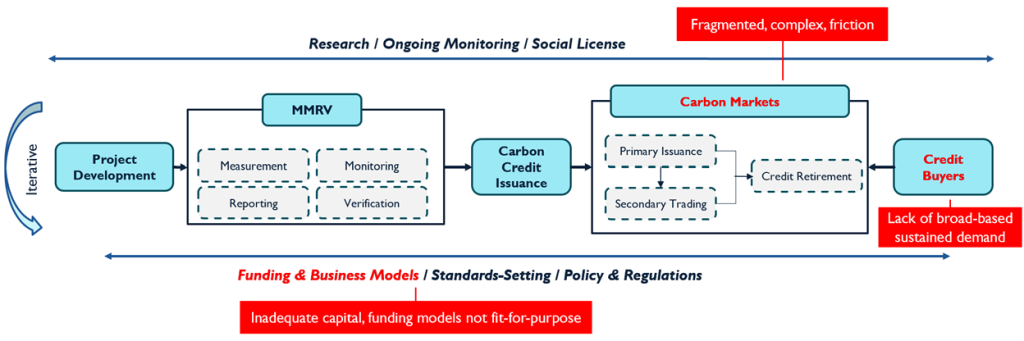
However, ocean-based climate solutions are value-chain based and will only be as strong as the weakest link. While significant efforts are currently underway across scientific research, technology development, policy advancement, and community engagement related components, they are not enough to make these solutions economically viable or scalable. Using carbon removal as an example: not only is there not enough funding being deployed, one can argue that the funding structures are not fit for purpose either. There is a lack of broad-based and sustained demand for the outputs of removal solutions, and carbon markets continue to remain a complex, fragmented, and difficult pathway for commercialization.
Market Solutions Platform:
It is imperative that these business-related components of the value chain are advanced in parallel, which is a crucial gap across the sector. Market Solutions Platform (MSP), a new strategic initiative of Canada’s Ocean Supercluster, is aimed at addressing this gap by accelerating the development of market for ocean-based climate solutions.
The outputs from MSP will be a portfolio of solution-enablement assets and will vary by the nature of the problem being addressed. Examples include proof of concepts, funding constructs, case studies, leading practices, or applied frontier research.
Ecosystem-based:
A fundamental design element of MSP is an ecosystem-based approach that leverages a network-of-network model. Efforts and direction of MSP will be guided and informed by the insights and expertise of a Strategic Advisory Team that is comprised of senior climate-business leaders with expertise in finance, capital markets, and carbon management, as well as our institutional collaboration partners CIBC, S2G Investments, Katapult Ocean, Propeller Ventures, and The Sustainability Accelerator, based in the Stanford Doerr School of Sustainability.
There are many opportunities to engage and collaborate with Canada’s Ocean Supercluster on MSP. If you want to learn more, then please visit https://oceansupercluster.ca/msp/ or contact msp@oceansupercluster.ca.
By: Akash Rastogi, Chief Capital Strategy Officer, Canada’s Ocean Supercluster
World Water Day: An Indigenous Perspective
A message is given that the time to grow, compete, and lead on the global stage is now. Canada needs future-shaping industries with bold ambition to carry growth forward.
March 22nd is World Water Day. A day to reflect on the importance of water. A challenge for humans today on a global stage is the growing awareness of the need for the caring of the earth, water, and repair of the environmental damage.
The spring equinox just occurred on March 20th. The spring equinox was the official new year for many global cultures around the world, including the Algonkian tribes in the northeast of Turtle Island (North America today). It is a day of balance, whereby, with the line up of the sun and moon, there is an equal amount of daylight and darkness. The return of the longer light of the sun to make things grow.
The moon controls the waters, including the tides. It represents the female water teachings connected to the carrying of water in the womb that brings new life. The sun is fire energy, which is represented by the male. In the culture, women are considered the “keepers of the waters” and men the “keepers of the fire.” The contrast is important in bringing in and sustaining new life. Similar to the sun and moon cycles impacting the Earth.
To many Indigenous nations, the earth is considered a living entity, and instructions were given in the caretaking of the land and its richness through oral history. Today, this is known as traditional knowledge. An example of this understanding is that the rivers and streams were seen as the veins of earth, like the human body. The human body is made up of about 70 percent water. Interestingly, about 71 percent of the earth’s surface is also water covered. The oceans hold about 96.5 percent of all Earth’s water, leaving only 3.5% freshwater globally. Utmost care is needed in preserving this resource.
The ancestors foretold that humans will be at a crossroads in the caretaking of the earth. That water would someday be for sale and not everyone will have a right to safe water.
As the Elders would remind the people in gatherings in the past: “We are here for future generations and it is not only human nations but also the animal nations, the winged nations, the ones that swim nations, the plant nations, the minerals, etc.”
With the need for industry to grow, compete, and lead on the global stage, we need to include the rising challenge of reparation and preservation of water for earth’s balance with this growth. A challenge to be seen not as a burden but an opportunity for innovative growth.
By: Elder Verna McGregor, Kitigan Zibi Anishinabeg First Nation
The Marine Dual-use Innovation Opportunity
If you can prove your tech works in real marine operations, you have a foundation for a global business.
The ocean is harsh. That’s why marine innovation can move into defence faster
Canada is a maritime nation bordered by three oceans and shaped by long coastlines, busy ports, and Northern waters that demand competence, not hype.
I started my career as a Naval Engineering Officer in the Royal Canadian Navy and later became an entrepreneur. Those two worlds taught me the same lesson: the marine environment is unforgiving, and it quickly shows you what’s real. Salt, cold, corrosion, vibration, and intermittent connectivity pose significant challenges to innovation, so if your technology works both offshore and on the waterfront, you’ve already passed a test most sectors never face.
That’s why many ocean-tech companies are closer to defence relevance than they think. And because marine operations generate huge volumes of sensor and operational data, AI is moving from a nice-to-have to an operational advantage.
Why this matters now for Canada
Canada’s new Defence Industrial Strategy makes one thing clear: national security and sovereignty aren’t just about what we buy, they’re about the strength of Canadian companies that can design, build, and maintain capability over decades.
From an OSC perspective, this is a meaningful opportunity for the ocean sector. By proving our technology at home, we’re not only serving domestic needs, but we’re also building strong foundations for Canadian marine products and services to compete in allied markets where reliability matters more than hype. If you have traction in the commercial marine space, you already have one of the most credible “business cards” in the world.
“Ocean-ready” is more than a slogan
Defence doesn’t just need clever ideas; it needs gear that won’t quit when conditions become tough. Defence needs systems that are:
- Reliable: systems that keep working in harsh conditions and still perform after months of real operations, not just during a controlled demo.
- Sustainable: tools that can be maintained with practical spares, documentation, and trained hands, so they can be deployed repeatedly at scale, especially in remote and harsh environments.
- Secure & interoperable: It must work with other systems and stay protected against cyber threats.
- Scalable: It needs to graduate from a “one-off success” to something we can roll out reliably, and repeatedly, without reinventing the system each time.
In plain terms: the marine environment is a built-in stress test. If you’re selling to ports, subsea companies, or coastal monitoring, you’re already being measured against these realities. Marine customers have near-zero tolerance for downtime, which is a mindset that translates well to national security.
AI at the edge: because the middle of the ocean has no cloud
We’re drowning in data but starving for insight. Modern maritime operations generate massive amounts of data, including radar, AIS, imagery, acoustics, telemetry, weather, and more. The challenge isn’t a lack of data, but how quickly we can interpret that data to assess what is happening.
In a high-stakes environment, an operator doesn’t need a raw data dump, they need a prioritized picture and confidence they can act on. This is where AI fits. Across the OSC ecosystem, we are seeing AI move to the edge, meaning it’s running directly on the ship or buoy rather than waiting for a satellite link to a server on land.
That “data-to-decision” speed is critical. Whether you’re optimizing commercial operations or maintaining awareness of unidentified activity in remote waters, the goal is the same: move from raw data to confident action before the window closes. In defence contexts, that speed must come with clear human oversight, traceability, and secure data handling.
The barrier: technology versus translation
The question now is: why don’t we see more ocean innovation quickly flowing into defence? It’s because “dual-use” isn’t just a label; it’s a translation job.
Marine innovators often hit the same walls:
- The language: requirements, compliance, and risk frameworks can feel like a foreign dialect.
- The timeline: defence procurement cycles can be longer than commercial cycles, so you need a plan that keeps revenue moving while you qualify.
- The trust gap: defence will ask where your data came from, how your models behave in mission-critical edge cases, and how humans remain in control.
None of these are insurmountable, but they can be hard to navigate alone, especially for SMEs with limited resources. It’s possible to board a moving ship in a swell, but it’s much easier with pilotage.
Sovereignty is about people, not just geography
If Canada is serious about sovereignty “coast to coast to coast,” then Indigenous and Inuit participation needs to be treated as foundational and not an afterthought.
Canada’s defence direction emphasizes stronger partnerships in the North. In practice, this means building programs that respect community priorities and create local capacity. A system is only truly “defence-ready” if the people living in the region are part of the leadership, the training, and the long-term support model. That means creating practical pathways to training, employment, local operations roles, and durable support capacity.
How OSC can help
OSC’s role is to help Canada’s ocean innovators prosper. For companies that decide defence is a sector they would like to explore, OSC will continue to develop programming and pathways that make that exploration more practical and more likely to succeed, without losing sight of commercial realities.
OSC’s support can include ecosystem orientation, translation support, and connection to partners who can help with validation, integration, and scaling. This includes ensuring Indigenous and Inuit partners help shape the solutions and bring local knowledge into how systems are designed, tested, deployed, and supported coast to coast to coast.
If defence is on your horizon, don’t wait for a perfect RFP. Document your “salt-water proof,” identify your top readiness gaps (security, integration, supportability), and be ready to engage. OSC will continue to develop programming to help members translate commercial traction into defence relevance and help connections with partners who can validate and scale.
By: James Craig, Chief Development Officer, Canada’s Ocean Supercluster
AI and Quantum at Sea: Canada’s Ocean Opportunity
I recently explored why ocean observation underpins a strong ocean economy. With advances from seabed mapping to real time sensors, we’re seeing the ocean in ways that were unimaginable a few years ago. But observation is only the start. AI and quantum technologies are reshaping decision‑making at sea, and this is Canada’s moment to lead.
The Ocean as a Living Data Layer
Our ocean is becoming increasingly digitized. Sensors are now deployed on vessels, autonomous drones, buoys, and underwater platforms. Low-cost satellites are multiplying the scale and fidelity of Earth observation. For the first time, we’re generating meaningful ocean data at a scale that AI systems can use.
Historically, lack of usable data has been one of the biggest barriers to applying AI in the ocean. Now the challenge is how we structure, share, and act on that data, particularly in real time, in extreme conditions, and across jurisdictions.
From Algorithms to Action: AI in Ocean Applications
AI in ocean isn’t just about building a good model. It’s about sustaining intelligent systems in remote, disconnected, and unpredictable environments. What does that unlock?
- Smarter weather prediction to improve safety and operations, from ship routing to offshore wind optimization.
- Autonomous inspection of vessels, subsea cables, and offshore platforms using drones paired with agentic AI.
- Adaptive digital twins that update with real time data to forecast biodiversity shifts, support stock assessments, and guide infrastructure planning.
- Smarter resource management, from monitoring protected areas and detecting illegal fishing to enabling selective gear that reduces bycatch.
We’ve also seen tangible commercial results. ThisFish, an early Ocean Supercluster investment, has boosted efficiency in fish processing through automated quality inspection, proving AI can drive both sustainability and profitability. As well, OnDeck AI, once a $10,000 Ocean Idea Challenge winner, is now emerging as a leader in marine object identification for defence, showing how small AI bets can scale into major outcomes with the right ecosystem.
Ocean Expert Knowledge Important for AI Founders
Building AI for the ocean isn’t like building for fintech or e‑commerce. The ocean is open, unpredictable, and interconnected; it ignores borders and bandwidth limits. To accelerate ocean intelligence, we need to design with those realities in mind.
Some things AI innovators should consider:
- The ocean moves in seasons. Missing a weather window can delay your testing by a year. Seasonality affects everything from data collection to validation and deployment.
- You’re operating in a contested, regulated space. From Indigenous data sovereignty to international maritime law, AI tools need to be designed with permission, security, and compliance in mind.
- Context matters. A model trained in the Pacific might underperform in the Arctic. AI systems must adapt to local conditions and evolving baselines.
- Many ocean tech projects still stall between research and real-world deployment. There is still work to do to develop paths from pilot to product, including investments in market validation, procurement pathways, and deployment infrastructure.
- Collaboration: success in ocean AI means working across sectors, engineers, Indigenous leaders, regulators, and researchers. Building trust across these communities is just as important as technical performance.
- Designing with AI ethics at the core: respecting data sovereignty, minimizing environmental impact, and ensuring autonomous systems act responsibly. Ethics also means inclusion: rural, remote, and Indigenous communities must have the tools, training, and insights to benefit from ocean innovation, not just experience its effects.
AI Ocean Projects to Watch
Canada’s Ocean Supercluster has co-funded over 150 projects, half of which now feature AI.
- Forecast AI: A $4.5M project led by MarineLabs to deliver hyper-local marine weather forecasts using AI, improving safety and operational planning for maritime operators.
- Oceanic Digital Twin Maritime Autonomy: A $6M initiative blending digital twins with autonomous maritime systems to increase efficiency, develop predictive maintenance algorithms and support next-generation communications frameworks.
- Enhanced Aquaculture Health Monitoring: A $5.9M AI-driven initiative to track fish health in real time and reduce stock losses, helping future-proof global food supply.
- Maritime Emergency Response System (MERS): A $1.4M AI system to enhance Canada’s ability to respond to maritime incidents with real time data and decision support.
- Environmental Genomics for Aquaculture: A $2.9M project leveraging AI to interpret eDNA for improved pathogen detection and environmental performance in salmon aquaculture.
- Smart Hook: A $4M project to build an autonomous recovery system for underwater assets, merging robotics and AI to tackle one of ocean tech’s most operationally difficult problems.
These are commercial-scale projects built with partners, co-investment from industry, and global applicability.
The Quantum Multiplier
Quantum computing could dramatically accelerate what’s possible (see the Canadian National Quantum Strategy). Optimizing marine logistics, simulating ocean-climate interactions, managing high-volume sensor data – these are computationally intensive problems that could be ideally suited to quantum computing as capabilities mature.
Combine quantum with autonomous systems and real time analytics, and we move from reactive to predictive ocean intelligence.
Canada’s Moment: A Leadership Opportunity in Ocean Intelligence
Canada has the world’s longest coastline, vast ocean territory, and strong AI and quantum ecosystems, but these strengths are still too often siloed. Ocean innovators rarely connect with quantum labs, AI founders don’t know the ocean’s urgent challenges, and investors haven’t yet recognized the ocean economy as a major data and intelligence frontier.
It’s also a key moment for dual‑use ocean technologies, where civilian, environmental, and defense needs converge in areas like surveillance, maritime awareness, and autonomous systems. Canada’s reputation for trusted, secure, and resilient tech gives it an edge.
The task now is to build the bridges, linking people, platforms, and capital, so Canada doesn’t just participate in this convergence but helps lead it globally.
A Call to Investors: This Is the Next Frontier
Canada has a generational opportunity to lead in ocean intelligence. With world‑class AI and quantum talent, rapidly expanding ocean datasets, and one of the planet’s most complex marine environments, including an Arctic coastline that spans nearly half the country, we’re positioned to turn this advantage into a global export.
But we need to move quickly and responsibly. For AI and deep‑tech investors, the next frontier isn’t land or space, it’s the ocean.
By: Kendra MacDonald, Chief Executive Officer, Canada’s Ocean Supercluster
mCDR: A Potential Billion Dollar Asset for Canada’s Climate Competitiveness
The ocean plays a central role in regulating the climate globally. It is the largest carbon storage sink on Earth, stores 45 times more carbon than the atmosphere, and 20 times more than land plants and soil combined. The ocean has already absorbed 40 per cent of fossil fuel emissions and 90 per cent of excess heat, and is continuing to absorb 30 per cent of excess carbon dioxide emissions annually.
This is what marine carbon dioxide removal (mCDR) entails. It is a suite of methods that either amplify or accelerate the ocean’s natural processes – be it biological, physical, or chemical, to reduce carbon in the atmosphere and safely store it in the ocean. Examples of mCDR approaches include ocean alkalinity enhancement, iron fertilization, artificial downwelling and upwelling, and electrochemical techniques.
It won’t come as a surprise that Canada – with the largest coastline in the world, a deep pedigree in ocean science, research, and technology development, mature marine infrastructure, and a vibrant innovation ecosystem – is well positioned to harness the potential of mCDR. But what is the opportunity? That is the question that a recent study led by Canada’s Ocean Supercluster and co-funded by a consortium of organizations across Canada, answers.
The opportunity comes from two levers: climate change mitigation and economic growth.
Climate Change Mitigation
The study estimates that mCDR has the potential to remove 130 metric tons of carbon from the atmosphere per year by 2050. To put this number into context, it represents about 15 per cent of Canada’s current carbon emissions, and 40 per cent of durable carbon removal capacity that Canada will need to be in line with the Paris Agreement’s 1.5-degree goal. In addition, if removals are allowed to be included in Nationally Determined Contributions (NDCs) – that is, commitments made by Canada to reduce greenhouse gas emissions – then mCDR can significantly help Canada meet those commitments. Beyond emission reductions, some mCDR approaches could also help Canada realize other benefits, such as reduction in acidification of its oceans, protecting marine habitats, and supporting coastal resiliency.
Thus, mCDR can significantly help Canada with its climate mitigation goals by reducing net emissions, developing scaled carbon removal capacity, meeting its international climate commitments, and significantly aiding Canada’s transition to a low carbon economy.
Economic Growth
mCDR also offers a meaningful contribution to Canada’s economic growth prospects via job creation, GDP growth, capital investment, and transitioning of workforce. The study estimates that by 2050 mCDR could:
- Create 90,000 new direct permanent jobs across Canada, with indirect job creation likely double of that – this amounts to about a third of Canada’s current total employment in the cleantech sector;
- Increase Canada’s GDP by $16B – about a third of Canada’s current ocean economy;
- Attract upwards of $30B of domestic and foreign capital investment; and
- Contribute to the creation of new investment and export opportunities.
To put the economic projections of mCDR into perspective, Canada’s electricity utility sector currently employs approximately 100,000 people throughout Canada, attracts more than $22 billion in capital investment, and contributes $35 billion to Canada’s GDP – numbers similar to mCDR projections for 2050. Thus, the mCDR sector in Canada in 2050 could be as big as the electricity utility sector is today.
In short, mCDR is not only well-aligned for Canada, but can also significantly contribute to Canada’s strategic objectives of climate competitiveness, transition to a low carbon economy, and economic growth, and should be actively nurtured in a responsible and equitable manner.
mCDR is still in its nascent stage and requires catalytic action from government, private sector, and communities to transform Canada’s starting advantage to be a global leader in mCDR into a lasting advantage.
By: Akash Rastogi, Chief Capital Strategy Officer, Canada’s Ocean Supercluster
Canada’s Ocean Economy: A National Asset Driving Growth and Innovation
Last week in Ottawa, during Ocean Week on the Hill, Canada’s Ocean Supercluster’s Board and Senior Leaders met with more than 50 officials from across eight different departments with the message that Canada’s ocean economy is building tremendous momentum with the opportunity to achieve a bold, 5X growth Ambition by 2035. With a membership of almost 1,000 from across the country, we spoke of the cluster and the broader Canadian ocean network as a national asset and framework from which we can work together to help deliver on Government’s key priorities.
Turning Investment into Impact
Since its inception, the OSC has been advancing a vision of a digital, sustainable, and globally competitive ocean economy. With just over $200 million in OSC ocean innovation project investments to March 2025, the cluster has co-invested alongside industry in close to 150 collaborative projects and has ultimately accelerated the development of more than 300 new ocean products and processes to sell to the world.
A recent economic report by Mansfield Consulting highlights the impact of OSC’s activities and investment with industry to March 2025. The study found that every dollar invested through the Ocean Supercluster generates more than five times its value in GDP contribution, underscoring the long-term economic and societal benefits of building a world-class ocean innovation ecosystem.
Delivering Economic Growth Across Canada
The economic impacts of OSC’s work to March 2025 includes:
- $1.7 billion in total economic output
- $1 billion in GDP contribution
- Nearly $748 million in total labour income
- Close to 10,000 jobs created
- $286 million in total tax revenues generated
- $295 million in follow-on investment raised
These numbers reflect more than financial returns; they represent new companies formed, new technologies brought to market, and a growing community of innovators creating sustainable prosperity through ocean opportunities. Through work of the OSC, 200 new ocean companies have been created, and 85 million people have learned more about the significance of the ocean economy through marketing campaigns.
Canada’s Ocean Moment
As Canada focuses on diversification of global partnerships, expanded market opportunities for made in Canada products and services, increased focus on defence and dual use opportunities, climate adaptation and resiliency, and meeting the moment in the transition of energy, food security, arctic activity and building a stronger economy and thriving communities for the future, we know this moment is also Canada’s ocean moment.
As the Government of Canada prepares to deliver strategies focused on AI, industrial defence, trade diversification, and climate competitiveness in the months to come, it is our ocean and Canada’s Ocean Supercluster that is at the ready to help mobilize, accelerate, and realize some of the most important opportunities of our time.
By: Nancy Andrews, Chief Engagement and Communications Officer, Canada’s Ocean Supercluster
Defending Canada – Where Ocean Capability Runs Deep
Defending Canada – Where Ocean Capability Runs Deep
When Canadians think about defence, they may think of military interventions, unfought battles, or continental security. But Canada’s new Defence Industrial Strategy (DIS) is about something bigger. It is about prosperity, economic development, jobs, and security. And, at its heart, Canada’s national sovereignty and a transformational shift in how we approach it.
As an ocean nation with the world’s longest coastline with thousands of companies and world-leading research institutions, our country’s ocean sector is robust and capable, poised for rapid growth, and at the centre of Canada’s national security future. Canada’s new DIS has a core message centred around building and retaining critical defence capabilities domestically. What is less widely recognized is how many of those capabilities are ocean technologies and the dual-use opportunities that already exist throughout the country.
Marine sensing systems, autonomous vessels, Arctic surveillance infrastructure, shipbuilding capacity, and AI-enabled data platforms are all identified as priority areas for sovereign development. These are not abstract defence categories. They represent the operational backbone of how Canada understands what’s happening in its waters, maintains northern presence, protects supply chains, and responds to emerging geopolitical pressures.
Ocean technology is no longer a niche sector. It is critical to our sovereignty.
Canada’s ability to monitor its three coasts, offshore infrastructure, shipping routes, fisheries, and northern passages depends increasingly on integrated ocean sensing networks and real-time data analytics. Satellites alone cannot provide this visibility. Ongoing maritime awareness requires sensor platforms in the water, autonomous monitoring systems, and AI tools capable of processing massive environmental and operational datasets.
Canada already possesses significant expertise in these areas. Across the 1,000-member network of Canada’s Ocean Supercluster from coast-to-coast-to-coast, companies of all sizes are working with academia, community, investors, and governments to develop advanced monitoring systems, environmental intelligence platforms, and autonomous marine vehicles designed for operations in harsh and remote environments and scaling up in the process. As the modernization of defence accelerates, these capabilities will be essential not only for military readiness but also for coast guard operations, environmental protection, and emergency response.
Sovereignty in the Arctic illustrates this most clearly where more reliable infrastructure, situational awareness, resilient logistics, and technologies capable of operating in extreme climate conditions are required. Ice monitoring systems, autonomous navigation tools, remote sensing platforms, and climate-adapted ocean solutions all play a role in maintaining Canada’s operational presence as does meaningful partnership with Indigenous and northern communities, whose knowledge, presence, and stewardship have shaped these regions for generations.
Autonomous and uncrewed systems further demonstrate the shift underway in defence capability. These technologies extend operational reach, reduce risks to workers, and allow ongoing monitoring across vast marine areas at lower cost. For a country responsible for millions of square kilometres of ocean territory, scalable autonomous systems are now a practical necessity.
Artificial Intelligence not only tie these ocean solutions together but it is an area of particular strength for Canada, representing more than 60 per cent of Canada’s Ocean Superclusters project portfolio today. AI now underpins sensor fusion, predictive maintenance for vessels, navigation safety, threat detection, and logistics optimization. Investments in sovereign AI-enabled marine systems deliver benefits beyond defence, supporting fisheries management, marine safety, climate monitoring, and the future of marine shipping. The same technologies that protect national security also strengthen our economic productivity and contribute to a healthier ocean environment.
The “Build, Partner, Buy” framework in the new strategy acknowledges this reality by emphasizing domestic industrial participation in key technology areas. If implemented effectively, this approach can help ensure Canadian firms are not just subcontractors in global programs but contributors to the core design, development, and support of critical systems. This distinction matters. This is not only about owning equipment, it’s about controlling intellectual property, maintaining skilled workforces, sustaining domestic supply chains, and the ability to adapt systems as required.
The Defence Industrial Strategy signals that Ottawa understands this shift. The next step is ensuring procurement decisions, innovation programs, and industrial partnerships consistently reinforce that domestic capability.
Canada’s Ocean Supercluster and its network of ocean innovation hubs across the country has a portfolio of over 150 projects valued at more than $600 million including many with dual-use capabilities ready to be deployed to strengthen our security. This, combined with a shared ambition to grow Canada’s ocean economy to $220 billion through Ambition 2035 puts Canada’s national ocean cluster at the ready to support government defence strategy and accelerating homegrown solutions and capabilities. As a country defined by its oceans, our sovereignty depends on what Canada builds at home.
Corporate Accountant
Canada’s Ocean Supercluster is an innovative, industry-led national ocean cluster that is ensuring we as Canadians, achieve sustainable economic growth in our ocean-based industries while also contributing to the health of our planet. The OSC’s mandate is to collaborate with investors and partners from across ocean industries to develop and commercialize innovative solutions to shared ocean challenges that are globally-relevant and include key investment areas such as ocean energy, sustainable seafood, the future of marine transport and climate solutions, and focus on growing more Canadian ocean companies and building the ecosystem to deliver on this potential. The OSC guides ideas from the conceptual to the actual; partnering with industries who have big goals and innovative concepts. Actualizing these ideas is our passion and the process is our mission. Our organizational values include creativity, inclusion, collaboration, and ambition.
The OSC has a team of over 30 employees across seven provinces. We are looking for an innovative thinker to drive our workforce agenda and contribute to the growth, retention and development of the ocean economy and the health of the planet.
About the Role
Reporting to the Director of Finance, the Corporate Accountant maintains an even balance of two key priorities; the first is to ensure timely, accurate financial reporting for the organization from accounts payable, bank reconciliations, accounts receivable, month end, quarterly and annual financial reporting. The second, is to liaise with identified proponents and our internal financial team to provide and verify essential financial information for claims submissions. In short, this role works tirelessly to make sure our corporate financial reporting is timely and accurate and project costs are clearly understood, documented, compliant, approved and recorded. Combining your critical thinking skills, high level of accuracy and work quality with a sense of urgency is essential to be successful in this role. You will be working in newly emerging markets, programs and processes; some of which you could enhance to provide both timely client service and a high level of accuracy with your work. This is an amazing opportunity to hone your skills and gain insight into emerging markets. If you pride yourself on being personable, curious and detail oriented, we would like to meet you.
Role and Responsibilities
Accounting
- Responsible for timely processing of accounts payable ensuring compliance with OSC procurement and employee expense policies.
- Prepare payments for approved vendor invoices, project claims, and employee expense reports.
- Prepare and send all conditional commitment invoices to members and any other invoices required.
- Work with the Member Relations team and Director of Finance to monitor receivables and follow up according to OSC policies.
- Support the Director of Finance by providing supporting documentation to internal and external auditors as required.
- Support the Director of Finance with reporting and adhoc projects as needed.
- Support the Director of Finance in timely closure and reporting of month end;
- Work with Director of Finance to continually improve the effectiveness and efficiency of processes through automation or process improvements.
Internal Project Audits
- Support the lead on the internal project audit process;
- Perform 6-8 project audits per year;
- Complete audit testing and documentation, including communicating with members as needed.
Claims Review
- Support the claims review process;
- Review, verify, validate, process and approve assigned project claims on a timely basis;
- Ensure thorough documentation of claims review, such as documenting the verification of supporting documentation, discussions with project proponents;
- Capture details and appropriate record management of all claims, electronically, and provide updates and reporting to other OSC teammates as requested
ISED Bi-annual Reconciliations
- Work with Director of Finance on timely and accurate submission of bi-annual ISED reconciliations:
- Update the assigned sections of the O&A templates for the ISED reconciliations
- Work with the Director of Finance to ensure the project portion of the reconciliation captures all adjustments; advances and project reimbursements
What You Bring
- Bachelor’s Degree in Finance, Accounting or related field
- 3-5 years of experience in corporate reporting
- Bi-lingual (French and English) is considered an asset
- Audit or claim review experience considered an asset
- Experience inside a firm and / or a client facing industry is critical
- Experience working within the blue economy considered an asset
Ideal Additional Qualifications
- Results-driven with a keen eye for detail, efficiencies and continuous improvement
- High level of critical thinking skills
- Ability to manage competing priorities in a deadline-driven environment
- Comfortable working and collaborating both virtually and remotely with others
- Detail-oriented coupled with proven sense of urgency to get things done well and on time
- Generates enthusiasm, excitement and engagement with their surrounding team
We are excited to continue building our team with experienced professionals who are passionate about realizing Canada’s opportunity and growing the ocean economy in a digital, sustainable, and inclusive way.
OSC is committed to your career growth and supports team-wide professional development through internal training in DEI (Diversity, Equity & Inclusion).
The OSC is committed to living its values, which includes the development of a diverse, inclusive, and equitable experience for our applicants and team members. Please let us know if you require any interview accommodations.
Apply Now
To be considered for this role, candidates are asked to submit a cover letter, detailing how you can contribute to OSC’s continued success, as a Corporate Accountant, and a resume to hr@oceansupercluster.ca.
Canada’s Moment is also our Ocean Moment
Our federal government is delivering a message that the time to grow, compete, and lead on the global stage is now. From the stage of ALL In last week, we heard Ministers speak of the importance that Canadians seize the moment, support Canadian businesses, and take a chance on each other. With the launch of the new Major Projects Office in late August, Government has focused its first round of projects, including the Montreal Port Authority, and a second round of project announcements to come focused on critical mineral development, wind energy, critical infrastructure in the North, ports, and transportation infrastructure connecting Canadians and our goods with the world, as well as innovative carbon capture and storage and carbon management technologies. This, combined with record defence spending commitments, an increased focus on Arctic sovereignty, and three new strategies expected this fall focused on Industrial Defence, Trade Diversification, and Climate Competitiveness, Ottawa is signaling urgency and accelerated action. In order to achieve this, Canada needs future-shaping industries with bold ambition to carry this agenda forward. Few are as ready to deliver as the ocean economy.
With membership now approaching 1,000, Canada’s Ocean Supercluster (OSC) is one of the largest blue clusters in the world. We have a project portfolio delivering solutions from shipping and scaled ocean energy to sustainable seafood, defence and dual-use technologies, the accelerated development of AI and emerging technologies, knowing the potential to build on this is tremendous. Together with our members and partners, and Canada’s entire ocean community we have a 5X growth ambition for Canada’s ocean economy through Ambition 2035. An ambition that earlier this spring, the Conference Board of Canada found that, if achieved, could deliver $378 billion in total economic benefit and support 1.2 million jobs in Canada. This is a shared ambition with benefits that run deep including creating jobs, growing and scaling more ocean companies, building resilience in communities, and making Canada a global leader in the sustainable ocean economy at a time when it is the ocean economy that is set to outpace the growth of the broader economy by 20 per cent.
Through a platform for the ocean economy called Charting the Course, the OSC has outlined how Canada can lead: accelerating innovation, scaling clean technologies, advancing dual-use and Arctic focused solutions, and expanding Canada’s trade opportunities with global partners through the ocean sector. The alignment with federal priorities is clear. The focus on industrial defence connects directly with Canada’s need for advanced shipbuilding, surveillance, and Arctic capabilities. Trade diversification is tied to ocean economy exports from aquaculture to marine technologies and equipment. And, climate competitiveness from scaling sustainable ocean industries that reduce emissions including marine transport, energy transition, and food security, and creating significant economic value in the process.
Global competitors aren’t waiting. Norway, Singapore, and the UK are already investing at scale to claim their share of the rapidly growing ocean economy, which has doubled in size five years sooner that expected. If Canada is to lead, we need to prioritize the ocean sector, we need to be bold, and we need to leverage the moment Canada is having and also make it Canada’s ocean moment. That means mobilizing capital, advancing more projects, investing in Indigenous-led innovation, building partnerships that unlock global markets, and actioning existing agreements with purpose with partner countries including Canada’s declaration on Ocean and AI with France.
As Canada’s Ocean Supercluster heads to Ottawa from October 21-23 for our Ocean Week on the Hill, we will share these messages and recommendations, encourage expediency and urgency in approaching them, and through our digital campaign toolkit for members and partners coming soon, we hope you will add volume to this activity.
The moment is ours to seize.
By: Nancy Andrews, Chief Engagement and Communications Officer, Canada’s Ocean Supercluster
Student Spotlight: Finding My Place in the Ocean Economy
If you told me a year ago that I’d spend my summer meeting Chiefs, learning about ocean technology, and helping launch initiatives that promote Indigenous-led climate resiliency, I probably wouldn’t have believed you. But that’s exactly where I have ended up, working as the Indigenous Engagement Intern at Canada’s Ocean Supercluster.
I’m studying Social Justice and Peace Studies, along with Politics and International Relations. My interests have always leaned toward community work, human rights, and equity, so I wasn’t sure if an ocean sector co-op was a perfect match. What I didn’t expect was how much the ocean sector overlaps with everything I care about: environmental justice, Indigenous sovereignty, climate policy, access to technology and intellectual property, and the right to a livable future. It’s easy to see the ocean as distant, but the truth is, what happens in and around it impacts everyone.
Working at the OSC has helped me realize how the ocean industry isn’t just about science and technology; it’s about people, relationships, and shaping the future. At the OSC, commitment to Indigenous engagement isn’t just a checkbox; it’s built into programs like the Indigenous Coastal Innovation Challenge, Indigenous Career Pivot Program, and the formation of the Arctic Steering Committee. Being part of those efforts gave me the opportunity to see how partnerships and innovation can come together to support community priorities and long-term resilience.
One thing that continues to resonate with me, more broadly, is how many voices and perspectives are still missing from these conversations. The ocean economy holds enormous potential, but we will never realize that potential without participation of all. Justice in this sector goes beyond inclusion, it requires making space for diverse ways of knowing, living, and leading. It was incredible to be part of a team that values this commitment to driving equity and collaborative action forward.
My advice to other students wanting a co-op? Go for it and be open! Consider applying to jobs and co-ops that don’t align perfectly with your vision or long-term career goals. Some of the most meaningful learning happens outside your usual lane. The world is more connected than we think, and there’s space for your values in every sector, even the ones you haven’t considered yet. You don’t need to change who you are to do important work; sometimes your perspective is exactly what’s needed to push a space forward.
By: Gia Angelopoulos, Indigenous Engagement Intern, Canada’s Ocean Supercluster